
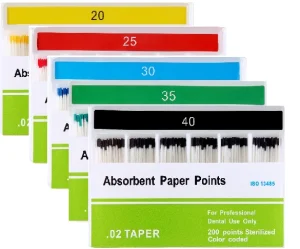
What is Paper points?
Paper points are sterile, absorbent endodontic consumables used to dry the root canal after irrigation and before obturation. MITOS paper points are available in 0.02 taper, 0.04 taper, and ProTaper‑compatible F1, F2, F3 sizes, allowing clinicians to match the point precisely to the canal’s shaping profile.
What does the 0.02 Taper size mean?
A 0.02 taper means the paper point increases in diameter by 0.02 mm per millimetre of length. This is the universal ISO taper used for:
- Narrow canals
- Initial drying after irrigation
- Cases shaped with hand files or conservative NiTi systems
- Situations where a minimal taper is required to reach full working length
Clinically, 02 taper points are the most adaptable and reach deep into the apical third.
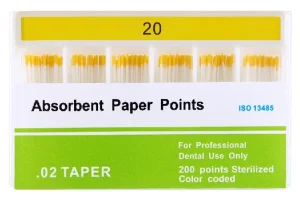
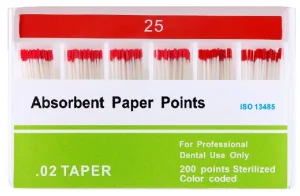
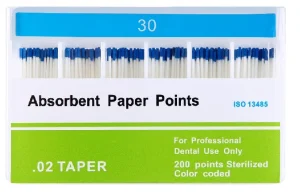
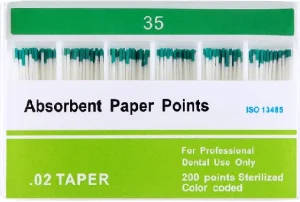
MITOS offers Sterile Paper Points 02 #20, Sterile Paper Points 02 #25 and Sterile Paper Points 02 Taper #30, Sterile Paper Points 02 #35 and Sterile Paper Points 02 #40 in taper 2 paper points.
A 0.02 taper means the paper point increases in diameter by 0.02 mm per millimetre of length. It is the standard ISO taper used for narrow canals and deep apical drying.
They are highly absorbent, pre-sterilised paper cones used during root canal therapy to dry the canal system after irrigation and before permanent obturation.
Residual moisture or chemical irrigants can compromise the seal of the core filling material (like gutta-percha), leading to endodontic failure or bacterial regrowth.
They match traditional ISO-standard hand files (such as K-Files and Hedstrom files) as well as rotary systems that utilise a standard .02 continuous taper.
The tips are colour-coded to match the international ISO standards for dental instruments (e.g. 20 is yellow, 25 is red, 30 is blue, 35 is green, and 40 is black).
Yes, they are tightly hand-rolled using rigid, long-fibre paper to ensure they maintain their shape and firmness even when fully saturated, making them easy to withdraw cleanly.
Yes, they are pre-sterilised and packaged in cellular or slide compartments to maintain strict clinical hygiene and prevent cross-contamination.